

Tankless Water Heaters
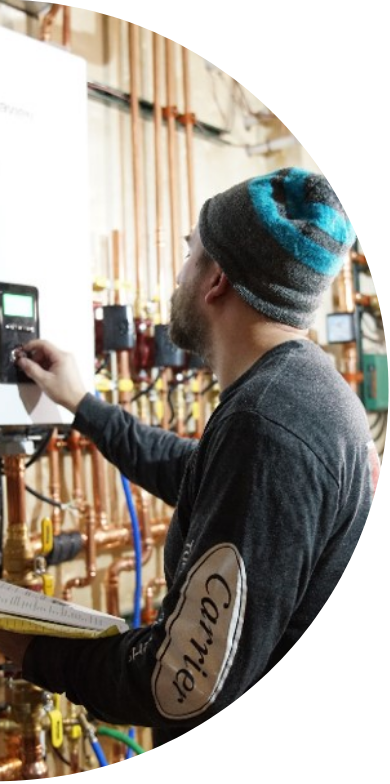
Invest in Unlimited Hot Water
Instead of maintaining a tank full of hot water at all times, a tankless water heater warms water exactly as it’s needed. Investing in a tankless water heater provides superior performance, energy savings, and an endless hot water supply without interruptions. Committed to your satisfaction, our team of experts offers a seamless customer experience, from initial consultation to professional installation and repair services.
Tankless is No Longer the Future, It’s the Present
How many times have you been running late to work only to be met with a cold shower? A tankless water heater can fix this problem, but there’s only one way to know for sure. Check out our water heater guide to see if a tankless water heater is the right choice for your home.

What to Expect
Here’s what you can expect when you work with the experts at Baumann & DeGroot.

FAQs
Quick answers to frequently asked questions about tankless water heaters.
What is a tankless water heater and how is it different from a conventional one?
Rather than storing pre-heated water in a tank, a tankless water heater heats cold water on demand as it flows through the unit, using either natural gas or electricity. Because it only heats water when you need it, it’s significantly more energy efficient than a conventional tank and provides a virtually unlimited supply of hot water, eliminating the experience of running out mid-shower.
Is it possible to switch from a conventional tank to a tankless system when replacing?
Yes, and many homeowners take advantage of a replacement as the opportunity to make that upgrade. Switching to tankless does typically require some modifications, such as upgrading gas lines or electrical capacity, but Baumann & DeGroot’s team handles all of that as part of the installation process and will walk you through what’s involved beforehand.
What is standby heat loss and why does it matter?
Standby heat loss is the energy a traditional tank water heater uses just to keep 40–80 gallons of water hot at all times, even when no one is using it. A tankless unit eliminates this waste entirely by only heating water when you actually need it.
Can I run out of hot water with a tankless water heater?
Since the water is heated on demand rather than drawn from a finite stored supply, you won’t “run out” the way you would with a tank. The caveat is that every unit has a maximum flow rate. If demand exceeds that capacity, such as three showers running simultaneously in a large household, you may notice a drop in temperature. Proper sizing at installation prevents this.
How long will a tankless water heater last?
Tankless water heaters typically last 20 years or more with proper maintenance, roughly double the lifespan of a conventional tank unit.
Can a single tankless unit supply my whole house?
Yes, in most cases. A properly sized whole-home tankless unit can handle the hot water demands of an average household. Larger homes with high simultaneous demand may benefit from a more powerful unit or, in some cases, multiple units working together.
What does "flow rate" mean and why does it matter?
Flow rate, measured in gallons per minute (GPM), is how much hot water a tankless unit can deliver at one time. A typical shower uses about 1.5–2.5 GPM. When selecting a unit, you’ll want to account for the total demand of all fixtures that might run simultaneously in your home to ensure the unit can keep up.
How big is a tankless water heater?
Tankless units are significantly smaller than traditional water heaters. Most are roughly the size of a large suitcase and are wall-mounted, freeing up significant floor space in your utility room, basement, or closet.
Do tankless water heaters require maintenance?
Yes, though it’s relatively minimal. The most important maintenance task is flushing the unit annually to remove mineral scale buildup, which is especially important in areas with hard water.
Does a tankless water heater still work if the power goes out?
No. Even gas-powered tankless water heaters rely on electricity to run their control board, ignition system, and safety sensors. Regardless of fuel type, your tankless unit will not function during a power outage unless you have a backup generator.

Schedule a Free Consultation
Every project is unique. Talk to one of our experts to determine the best solution for you and your home.