

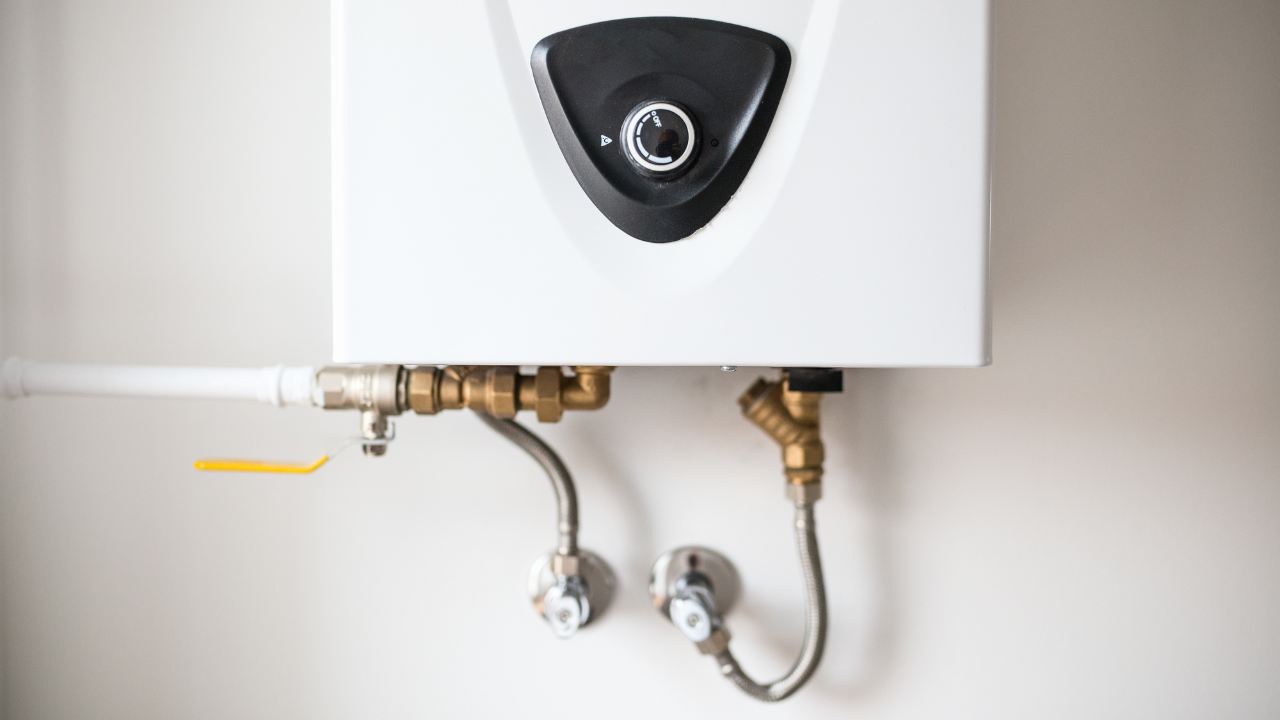
A tankless water heater heats water on demand instead of storing it in a tank, delivering hot water only when needed. While traditional storage tank water heaters have been the standard since the early 1900s, rising energy costs and environmental awareness have driven interest in more efficient alternatives. Modern tankless systems use powerful gas burners or electric heating elements to instantly heat water as it flows through a heat exchanger, adjusting output in real time and shutting off completely when not in use. Compared to traditional tanks, tankless water heaters offer endless hot water supply within flow-rate limits, significantly save energy by 24–34%, have a longer lifespan of 20–25 years, save space, and have a reduced risk of water damage. However, they come with higher upfront costs, increased maintenance needs, installation complexity, performance challenges in cold climates, and a reliance on electricity during power outages.
What is a Tankless Water Heater?
Have you ever tried to take a shower while the washing machine and dishwasher are running, only to be met with lukewarm water? If this sounds all too familiar, it might be time to consider upgrading to a high efficient water heater that can keep up with your family’s needs.
A tankless water heater is a compact appliance that heats water only when you need it, without storing hot water in a tank. Unlike traditional water heaters that maintain a large reservoir of preheated water 24/7, tankless water heaters activate when you turn on a hot water tap, rapidly heating cold water as it flows through the unit and delivering an endless supply of hot water for as long as you need it.
History of Water Heaters
While home heating and cooling systems have seen rapid efficiency improvements over the last several decades, water heating technology remained largely unchanged for much of the 20th century. Traditional storage tank water heaters, first popularized in the early 1900s after Edwin Ruud’s invention of the automatic gas water heater, became the standard in American homes. These systems were reliable and affordable, but typically operated at around 60% efficiency. Because they performed “well enough” compared to other home systems, innovation in water heating lagged behind advancements in furnaces and air conditioners. Over time, incremental improvements have made storage tank water heaters safer and more convenient, but left room for efficiency improvements.
In recent decades, rising energy costs and environmental awareness has increased focus on water heater efficiency. Early tankless water heater concepts existed as far back as the late 1800s, but were viewed as impractical. It wasn’t until the 1960s and 1970s, driven by space limitations in Japan and higher energy costs in Europe, that tankless technology began to mature into a viable residential option. While high-efficiency options often come with higher upfront costs, improvements in technology and efficiency standards have made advanced water heating solutions more accessible and appealing for homeowners seeking long-term energy savings and sustainability.
How Tankless Water Heaters Work
Tankless water heaters operate without the use of a storage tank. Instead, water heats instantaneously as it flows through a heat exchanger in the unit. When you open a hot water tap, cold water flows through the incoming water line into the tankless water heater. A flow sensor inside the unit detects water movement and signals the system to activate. In gas tankless water heaters, the control board triggers the ignition system, which lights the gas burner. In electric tankless water heaters, incoming water passes over high-powered, energized heating elements.
As cold water flows through the heat exchanger, it rapidly absorbs heat from the gas burner flames or electric elements. The unit continuously monitors the incoming water, outgoing water, and flow rate, making adjustments as needed to maintain your set temperature. If you’re running just one shower, the unit operates at partial capacity. If you simultaneously start the dishwasher and washing machine, the system ramps up to full power to maintain consistent temperature across all devices.
Once you close the hot water tap, the system immediately shuts down the burner or heating elements. There’s no stored water to keep hot, and no energy is consumed without direct use. This is the primary source of energy savings, as the stored water in traditional tanks continuously loses heat, requiring periodic reheating even when no one is using hot water.
Tankless vs Traditional Water Heaters
| Tankless | Traditional | |
| Supply and Capacity | Heats water on demand, but needs a high enough flow rate to heat multiple appliances at once | Stores 40-75 gallons for immediate use, but must wait 30-60 minutes for tank to reheat |
| Energy Efficiency | Eliminates standby heating, reducing hot water energy by 24-34% | Uses more energy to maintain preheated water at set temperature |
| Complexity and Cost | Higher purchase and installation complexity, but lower energy costs over time | Lower purchase and installation complexity |
| Space Requirement | Smaller, can be installed on walls and tight spaces | Larger, occupy more floor space and need designated area |
| Maintenance | Requires more diligent maintenance | Require minimal maintenance |
| Lifespan | 20-25 years | 10-13 years |
Tankless Water Heater Pros and Cons
Understanding both the advantages and limitations of tankless water heaters helps homeowners set realistic expectations and determine whether this technology aligns with their household needs and priorities.
Advantages to Go Tankless
- Endless Hot Water Supply: Going tankless means never running out of hot water. Unlimited supply within flow rate can especially be helpful for busy households. Large families can take consecutive showers without fear of cold water or depleting hot water supply for other uses.
- Significant Energy Savings: Eliminating standby heat loss reduces hot water energy consumption by 24-34% according to Department of Energy data. Over the unit’s 20-25 year lifespan, these savings can add up to $2,000-5,000, offsetting the higher initial cost.
- Space Efficiency: Tankless water heaters free up valuable floor space by mounting on walls and occupying less space than a traditional 40-75 gallon storage tanks. This can be especially helpful in homes with limited utility areas.
- Longer Lifespan: With proper maintenance, tankless water heaters last 20-25 years compared to 10-13 years for traditional tanks. While you might replace a traditional tank four times over 40 years, you’d likely install just two tankless units in that timeframe.
- Reduced Risk of Water Damage: While tankless water heaters can develop leaks, they contain only the small amount of water currently flowing through the system, significantly limiting potential water damage. Traditional tanks store significantly more water, meaning a leak or rupture could cause consequential damage.
- Cleaner, Fresher Water: Tank water heaters store water for extended periods, during which sediment accumulates. Additionally, tank interiors can develop rust and corrosion that affects water quality. Tankless water heaters heat fresh water flowing directly from your supply, eliminating concerns about contamination entering your hot water stream.
Disadvantages to Go Tankless
- High Initial Cost: Total installed costs can be $3,000-5,000+, making tankless water heaters a significant investment.
- Flow Rate Limitations: While tankless water heaters provide endless hot water, they can’t heat unlimited gallons per minute. A typical whole-home gas tankless water heater delivers 6-9 GPM. If you’re simultaneously running three showers (1.5-2.0 GPM each), a dishwasher (1.5 GPM), and a washing machine (2.0 GPM), you’d exceed the unit’s capacity, resulting in reduced water temperature.
- Higher Maintenance Requirements: Tankless water heaters require annual professional maintenance. Neglecting this can increase failures and shorten lifespan.
- Installation Complexity: Installation complexity can vary, often including necessary upgrades like larger gas lines, new venting, electrical modifications, or even whole-home replumbing in some cases. This can increase the cost and installation timeline, which can be difficult for homeowners to accommodate.
- Cold Weather Performance Impact: Tankless water heaters heat incoming water from whatever temperature it enters at. In Michigan winters, groundwater temperatures drop to 37-42°F, requiring significantly more energy to reach hot water temperatures compared to summer when incoming water might be 55-60°F.
- No Hot Water During Power Outages: While traditional tank water heaters can provide hot water during power outages (at least until the stored hot water is depleted), tankless water heaters require electricity for their control systems. For homes concerned about power reliability, this dependency can be significant disadvantage.
Tankless Water Heaters in Holland, MI
Successful tankless water heater installation and ongoing service require expert HVAC professionals. Baumann & DeGroot understands the unique considerations for West Michigan installations including cold weather sizing, venting in various home styles, gas line requirements, and water quality challenges. The decision to install tankless water heaters in Holland should account for your specific home’s infrastructure, your household size and hot water usage patterns, your budget for both installation and ongoing maintenance, and whether you plan to stay in your home long enough to realize the long-term benefits.
Contact Baumann & DeGroot Heating & Cooling at (616)396-4328 or schedule online to assess your particular situation and provide honest guidance on whether tankless water heaters make sense for your home.
Tankless Water Heaters FAQs
Total installed costs for tankless water heaters typically range from $3,000 to $5,000 depending on the unit and installation complexity.
Sizing tankless water heaters requires calculating your peak hot water demand in gallons per minute (GPM) and the temperature rise needed based on your coldest incoming water temperature. Always consult a professional for proper sizing.
Yes, properly sized gas tankless water heaters can supply whole-home hot water needs for most residential homes.
With proper annual maintenance, tankless water heaters typically last 20-25 years, nearly double the 10-13 year lifespan of traditional heaters.
No, tankless water heaters require electricity to operate.
No, this is strongly discouraged and often illegal. The complexity and safety concerns make professional installation essential for tankless water heaters.
Learn More About Water Heaters
Discover our water heater services
Troubleshoot water heater repair
Get help with a water heater replacement
Learn about a tankless water heater investment
Schedule a tankless water heater quote