

Regular air conditioner maintenance is one of the best ways to extend the life of your system, improve energy efficiency, and avoid costly repairs. Homeowners can make a big difference by keeping the outdoor condenser coil clean and free of debris, replacing the air filter on a regular schedule to maintain proper airflow, and scheduling annual professional tune-ups to catch small issues before they become major problems. It’s also important to watch for warning signs like poor cooling performance, unusual noises, ice buildup, or a non-spinning condenser fan, as these can indicate developing problems. With a few simple maintenance habits, you can help your AC run more efficiently, lower your energy bills, and maximize the lifespan of your system.
How to Maintain Your Air Conditioner
Why AC Maintenance Matters
The best thing a homeowner can do for their air conditioner is proper maintenance. It doesn’t cost a lot, can add years onto your system’s life, and save you thousands in the long run. The average life of an air conditioner is around fifteen to twenty years, but that range heavily depends on how well the system is maintained. Anything that adds unnecessary stress can shorten its lifespan, which is why a few simple habits go a long way.
Simple AC Maintenance Steps Every Homeowner Can Do
Keep Your Condenser Coil Clean
In order for your air conditioner to properly cool your home, it needs to pull warm air from the indoors and release that heat outside. This release happens through the condenser, the boxy cabinet with the fan on top sitting next to your house. Heat travels through the coils wrapped around the unit while the fan blows air across them, releasing that heat outdoors. For that release to happen efficiently, air needs to be able to pass freely through the coil’s fins. Anything that blocks that airflow keeps the heat from escaping properly and forces the whole system to work harder than it should.
Think of your condenser coil like the radiator in your car: if it gets plugged up, the engine overheats. The same thing happens to your air conditioner’s compressor. When the unit gets too hot, it will shut down on thermal overload. Keeping that coil clean is one of the simplest, and most important, things you can do.
Be on the lookout for:
- Wood chips and mulch: Landscapers will often pile mulch right up against the unit, sometimes stacking it six inches or more up the side of the coil.
- Grass clippings: Mowing near the unit can blow clippings directly into the fins, where they mat down and block airflow.
- Cottonwood: cottonwood seeds and other airborne fluff can build up on the coil surprisingly fast, forming a layer that’s easy to miss.
- Leaves and other debris: Fallen leaves, dirt, and dust can settle into the fins over time, especially if the unit sits near trees or landscaping beds.
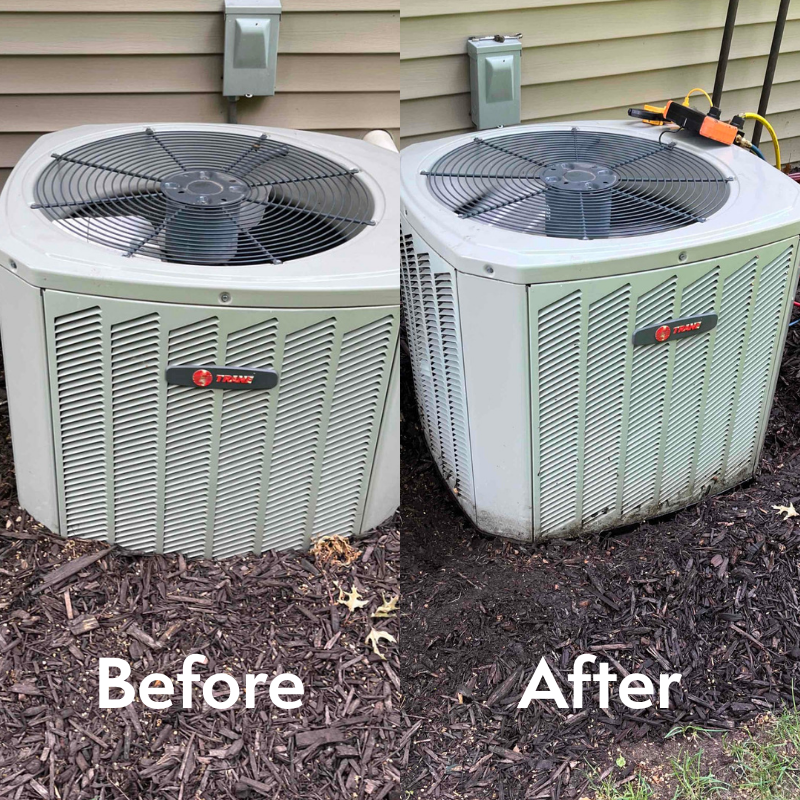
A good rule of thumb is to keep at least a couple feet of clearance around the unit and to walk out and glance at the coil every so often, especially after mowing or landscaping work. If the coil does get dirty, you can spray it out with a hose. Just be delicate about it and spray at a downward angle so you don’t bend the fins.
Change Your Air Filter Regularly
Many homeowners don’t know that the same filter that keeps your furnace running efficiently also affects the air flow in your air conditioner. Every bit of air that your system heats or cools passes through this filter before it circulates through your ductwork, and its job is to catch dust, pet hair, and other airborne particles before they reach the equipment. The general industry standard is one month of use per inch of filter thickness, so a 1-inch filter should be changed monthly.
| Filter Depth | Frequency |
| 1″ | Change monthly |
| 2″ | Change every 2 months |
| 4″ | Change every 4 months |
A dirty filter doesn’t just get less effective, it actively works against your system. As dust and debris build up, the filter becomes harder for air to pass through, which restricts airflow across the whole system. Reduced airflow can have the following consequences:
- Your air conditioner has to run longer to cool the same space, driving up energy bills.
- Extra strain on the blower motor as it works harder to pull air through a clogged filter, shortening its lifespan.
- Without airflow to keep it above the freezing point, the evaporator coil can ice over.
- A clogged filter can eventually start letting more particles bypass or recirculate into your home, leading to poor air quality.
Simply put, a filter that never gets changed puts stress on nearly every part of your system, making it one of the most important tasks to stay on top of.
Stay On Top of Yearly Maintenance
Yearly maintenance is one of the simplest ways to protect your investment and get the most years out of your air conditioner. During an annual tune-up, a technician typically:
- Checks and adjusts the refrigerant charge: Proper refrigerant levels are essential for cooling efficiency; if levels run low, the compressor can run dry and suffer serious damage.
- Inspects electrical connections and components: Loose or worn connections can cause system failures or even become a safety hazard if left unaddressed.
- Tests the compressor and fan motor: Catching early signs of wear helps prevent a breakdown during the hottest part of the year.
- Cleans the condenser and evaporator coils: Clean coils allow the system to release and absorb heat efficiently, reducing strain and energy use.
- Checks airflow and the condition of the air filter: Proper airflow keeps the system from overworking and helps maintain consistent cooling throughout your home.
- Lubricates moving parts: Reduces friction and wear on components that keep the system running smoothly.
Regular maintenance keeps your system running efficiently, reduces wear and tear, and helps catch small issues before they turn into expensive repairs.
Watch for Warning Signs
Between professional visits, it’s worth paying attention to how your system is running day to day. Catching a problem early can mean the difference between a simple repair and a costly breakdown. Here’s a few things to keep an eye on between professional visits:
- Struggling performance: If your system seems to be running longer than usual, cycling on and off more frequently, or struggling to keep your home at the set temperature, that’s often an early sign something’s off.
- Unusual noises: Grinding, squealing, or banging can point to a failing motor, loose component, or a part that’s wearing out internally.
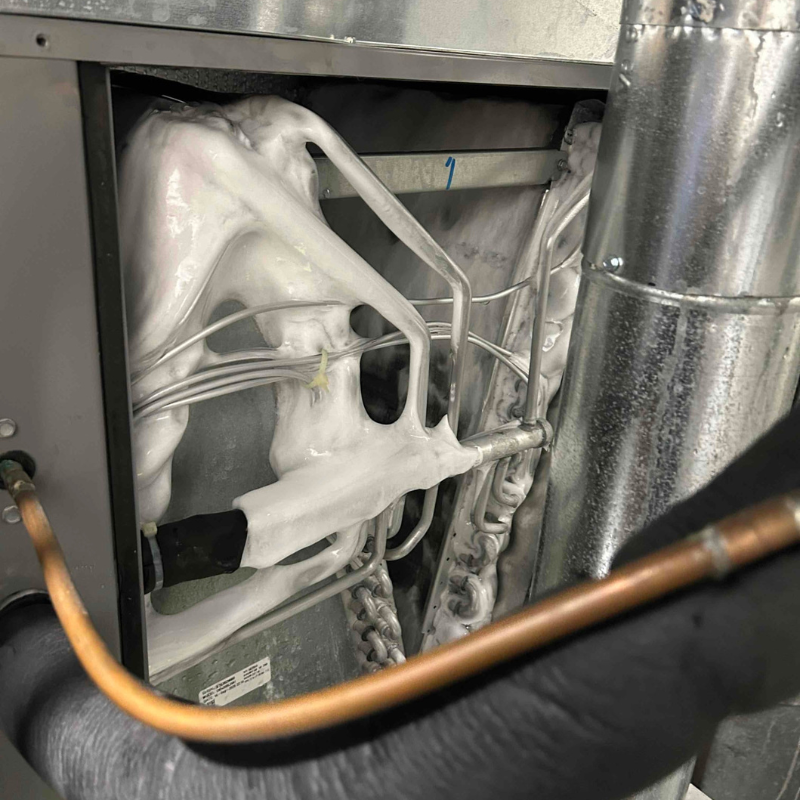
- Water or ice around the coil: Moisture pooling near the indoor coil, or visible ice forming on the coil or refrigerant lines, is a common sign your system is low on refrigerant and starting to freeze up.
- A condenser fan that isn’t spinning: If you go outside while the system is running and the fan on top of the condenser isn’t turning, that’s a clear sign something is wrong and could point to an electrical, capacitor, or motor issue.
AC Maintenance in Holland, MI
If you’ve noticed any of these warning signs, or it’s simply been a while since your last tune-up, the team at Baumann & DeGroot Heating & Cooling is here to help. Whether you need a routine maintenance visit, a same-day repair, or just want a second opinion on your system, our technicians can take a look and make sure your air conditioner is ready to handle whatever the season brings.
For professional AC maintenance in West Michigan, contact Baumann & DeGroot Heating & Cooling at (616)396-4328 or schedule online.
AC Maintenance FAQs
Most manufacturers and HVAC professionals recommend a professional tune-up once a year, ideally in the spring before cooling season begins.
Yes, homeowners can gently rinse the coil with a garden hose at a downward angle. Avoid high-pressure washers, which can bend the delicate fins.
Common signs include reduced cooling performance, ice or water buildup around the coil, and longer-than-usual run times.
A clogged filter restricts airflow, forcing your system to work harder. Over time, this adds stress to the compressor and can shorten your unit’s lifespan.
This can indicate an electrical issue, a failed capacitor, or a motor problem. It’s a sign to call a professional right away.
A frozen evaporator coil is often caused by restricted airflow, such as from a dirty air filter, or by low refrigerant. Running the system with a frozen coil can put extra strain on the compressor.
Thermal overload shutdown is actually a safety feature that protects the compressor from overheating, but repeated shutdowns are a sign the system needs attention, such as coil cleaning or a refrigerant check.
It’s worth walking outside to glance at the coil every few weeks during the cooling season, especially after mowing, landscaping work, or during cottonwood season when seed fluff builds up quickly.
Yes, a 1-inch filter typically needs monthly changes, while a 4- or 5-inch filter can often go three to six months, though it’s worth checking the manufacturer’s recommendation.
A couple of feet of clearance on all sides is a good rule of thumb, keeping mulch, plants, and yard debris from piling up against the coil.